Plastic Credits
From Plastic Waste to Verified Impact.
What Are Plastic Credits?
Plastic Credits are registry-issued units of eligible plastic impact created under the GEIS Plastic Impact Protocol. In the GEIS system, project activity is measured, documented, and reviewed at the kilogram level through Verified Plastic Kilograms (VPK), while issued Plastic Impact Credits (PICs) are created only in metric-tonne units. One PIC equals 1,000 kilograms of eligible plastic impact recorded under the Protocol.
VPK and PIC
Verified Plastic Kilograms (VPK) are the internal accounting records used to track eligible plastic activity at the kilogram level. VPK are not tradable credits. Plastic Impact Credits (PICs) are formal registry-issued units created only in metric-tonne increments after the required review, verification, and issuance process. This means the system tracks activity with precision at the kilogram level, while formal credit issuance occurs only at 1 PIC = 1,000 kg. PICs may be transferred, retired, or used in accordance with GEIS registry rules and claims controls.
The Plastic Impact Protocol
The Plastic Impact Protocol is the governing standard behind how GEIS registers projects, validates eligibility, monitors activity, verifies performance, issues Plastic Impact Credits, and controls registry status, transfer, retirement, and claims use. It is designed as an independent plastic crediting framework built for launch now, while remaining structurally prepared for possible future migration into recognized third-party systems where appropriate.
At launch, the Protocol supports Collection Class (PIC-C) and Mechanical Recycling Class (PIC-MR), with other future pathways remaining inactive unless formally activated by GEIS.
PIC-C — Collection Class
PIC-C may be issued only for plastic waste physically collected from conditions that present a credible risk of mismanagement, leakage, dumping, or inadequate downstream handling in the baseline scenario. Issuance is based on net eligible collected mass after conservative deductions, with project activity tracked internally at the kilogram level through VPK and formal issuance created only in PIC units.
PIC-MR — Mechanical Recycling Class
PIC-MR may be issued only for plastic waste that enters a qualifying mechanical recycling pathway through an approved facility chain. For launch purposes, issuance is based on verified net eligible input into approved mechanical recycling, not on output tonnage, and does not include reserved advanced-recycling pathways unless GEIS formally activates them in the future.
How The Protocol Works.
The Plastic Impact Protocol follows a controlled lifecycle from project intake and eligible activity review through monitoring, validation and verification, issuance, registry recording, transfer where applicable, and retirement. Each eligible batch must be documented, reviewed, and supported by evidence, with activity tracked internally at the kilogram level through VPK and formal credit issuance occurring only in PIC units.
Step 1: Collection
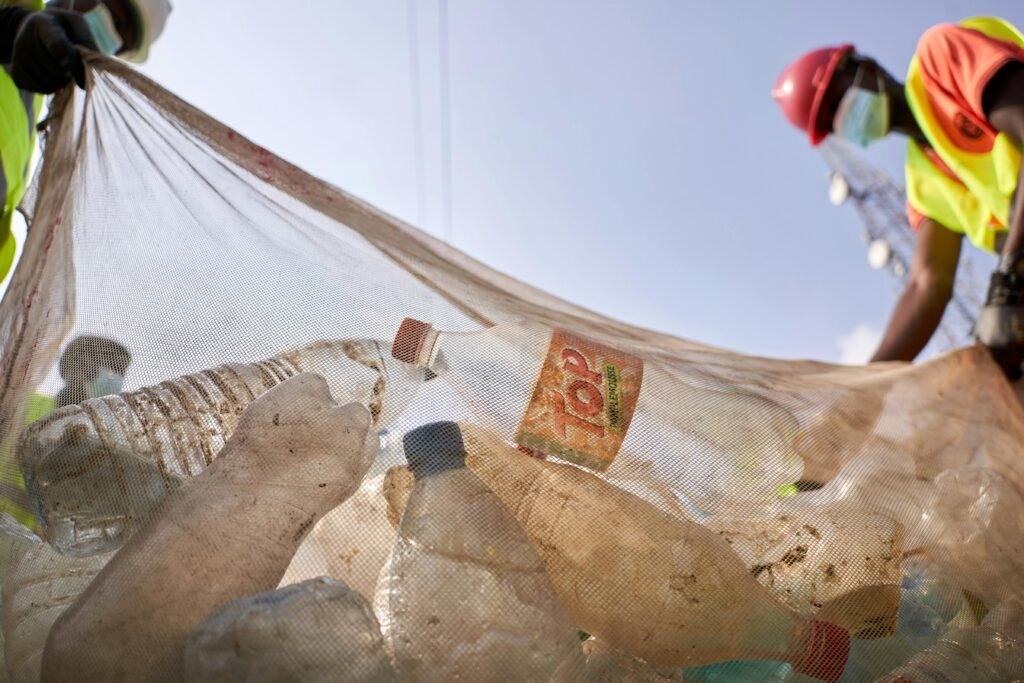
Eligible plastic is gathered from mismanaged or low-value waste conditions such as dump sites, landfill-bound streams, transfer points, or other uncontrolled pathways. The material is photographed, logged, and assigned a batch reference so it can be tracked through the GEIS system.
Step 2: Transport and Intake
A transport partner moves the material through an approved chain of custody to an accepted facility or downstream intake point. Weights, transfer records, timestamps, custody records, and location evidence are recorded so the movement of eligible mass can be reviewed under the applicable pathway.
Step 3: PIC-C Qualification
Where collected plastic satisfies the Collection Class applicability conditions and the required evidence is confirmed, the eligible mass may qualify under PIC-C. This recognizes verified recovery from baseline-risk or mismanaged conditions into a controlled downstream handoff.
Step 4: Mechanical Recycling Pathway Qualification
Where eligible plastic enters an approved mechanical recycling pathway, the material is tracked through intake and qualifying process entry. For launch, PIC-MR is based on verified net eligible input into approved mechanical recycling, subject to pathway rules, deductions, and evidence requirements.
Step 5: Monitoring and Evidence Review
For each monitoring period, project activity must be supported by a batch evidence package that may include quantity records, custody records, receiving records, media, route or source records, and other supporting proof appropriate to the pathway. GEIS reviews the monitored data, evidence sufficiency, deductions, and class assignment before issuance is considered.
Step 6: Review and Verification
GEIS performs an internal review of the batch, including evidence, calculations, deductions, and class assignment. Independent validation and verification are then used as required to confirm project eligibility and monitored performance before PIC issuance is approved.
Step 7: Issuance and Registry
After approval, GEIS issues Plastic Impact Credits in PIC units, with each PIC equal to 1,000 kilograms of eligible plastic impact. Credits are recorded in the GEIS Registry with project details, issuance class, quantities, status, and traceability records, while underlying kilogram balances remain tracked internally through VPK.
Transfer, Retirement, And Claims Use
Once issued, PICs may be transferred, retired, or otherwise managed only in accordance with GEIS registry rules and claims controls. Completed environmental use claims are tied to retirement status, while sponsorship or funding support alone does not automatically create exclusive claim rights.
What Plastic Credits Support.
Plastic Impact Credits are designed to support truthful, documented environmental use claims tied to specific quantities, project activity, and issuance class. They are voluntary environmental impact units and do not provide buyers with ownership, equity, debt rights, or governance rights in GEIS. Only retired PICs support completed impact claims, while sponsorships, funding support, or pending kilogram balances do not by themselves constitute retirement claims.